
Checking Blind Spots
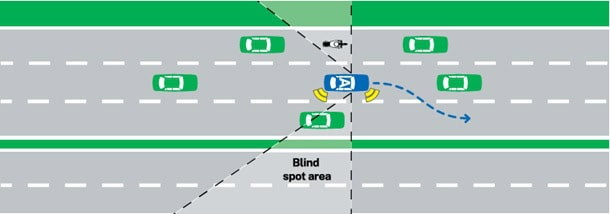
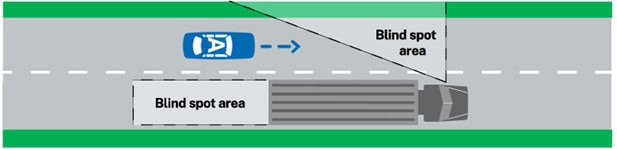
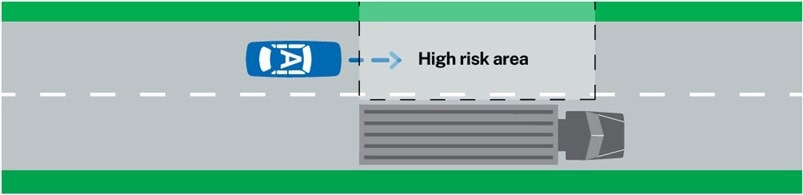
A car, motorcycle, or bicycle in an adjacent lane can easily be positioned beyond the area visible in the mirrors. Checking your blind spots is an essential observation skill as many crashes occur because drivers do not turn their head and look over their shoulder before steering. "Mastering these observation checks is vital for consistently driving safely and anticipating hazards on the road."
When to Check Blind Spots
You must turn your head and check your blind spots before:
- Changing lanes
- Leaving or returning to the kerb
- Merging or diverging
- Reversing
- Turning left – looking for pedestrians, cyclists, and motorcyclists who could be beside you
- Turning right – looking for vehicles that may be overtaking you
- Joining the traffic stream
- Leaving the inside lane of a multi-lane roundabout
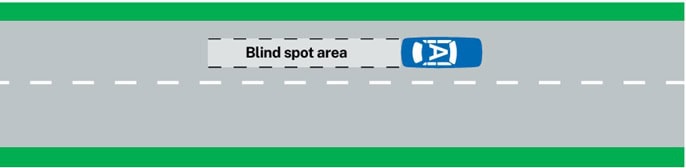
When reversing, you must turn your head and look over your shoulder to check through the rear window for vehicles and pedestrians that may not be visible in your mirror. All vehicles have blind spots behind them.


Speed Management
You must drive at a safe and legal speed, managing your speed to suit traffic, weather, and road conditions.
Maintain space to the front
You must adjust your speed to maintain crash avoidance space to the front of your vehicle. The minimum safe distance needed in front is three seconds. This must be increased in poor conditions, or when you are being followed too closely by another vehicle.
To calculate a 3-second crash avoidance space: as the rear of the vehicle in front of you passes a stationary object, start a 3-second count: "one thousand and one, one thousand and two, one thousand and three." If your car passes the object before you finish, you are following too closely. Slow down and repeat until the gap is achieved.


Increase your crash avoidance space to 4 or more seconds when driving in poor conditions, such as on unsealed, icy, or wet roads, or at night.
Maintain space when stopped
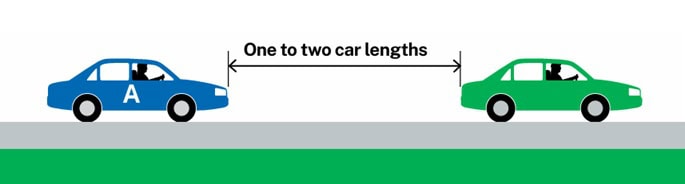
When stopped in traffic, keep one to two car lengths from the vehicle in front to reduce the risk of collision if you are hit from behind. You may move forward to within 1m once other vehicles are stopped behind you.
Reduce speed
Slow down if you do not have a clear view of the road ahead, such as at blind corners, blocked intersections, or crests. Slow down if you cannot see five seconds ahead.
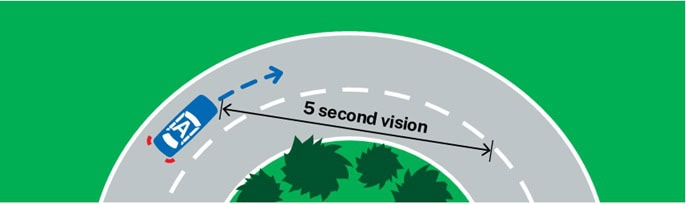
For traffic calming devices, such as speed humps or chicanes, slow down enough to ensure there is no undue jolt or sideways roll of your vehicle.
Road Positioning
Maintaining a safe and predictable position on the road is a core skill for low-risk driving. This applies to your positioning at intersections, while navigating tight spaces, and during all road manoeuvres.
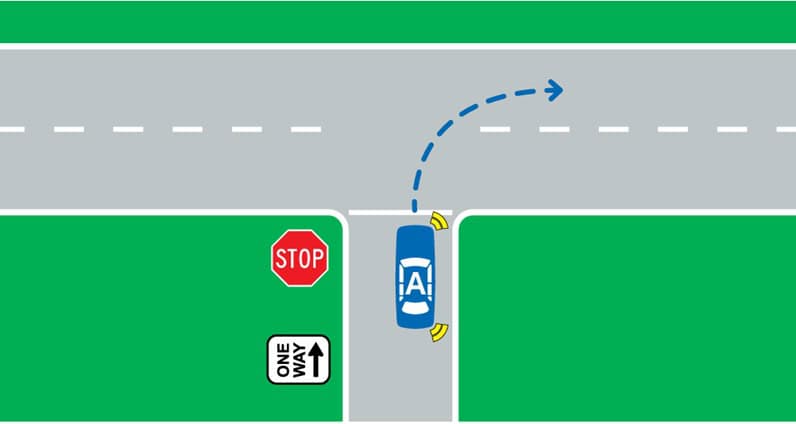
When you approach a ‘Stop’ sign and ‘Stop’ line, ensure you come to a complete, smooth stop. Ideally, stop before the line and as close as possible to it. If your initial stop is further than 1m from the line, carefully move forward to within 1m, ensuring no part of your vehicle crosses over. Always remain at a complete stop until you have confirmed it is safe to proceed.
Buffering
Buffering is the proactive practice of keeping as much space as practical to the sides of your vehicle at all times. You should aim for at least 1m of clearance from other vehicles, parked cars, and potential hazards.
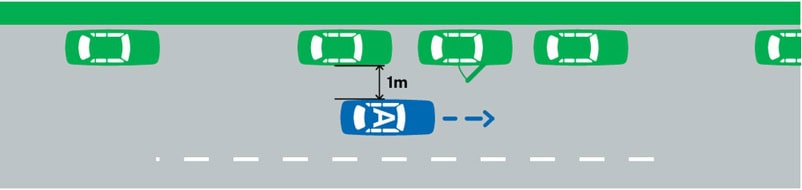
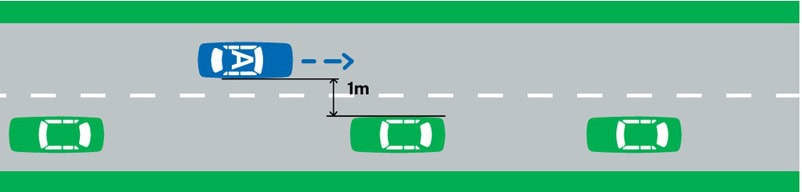
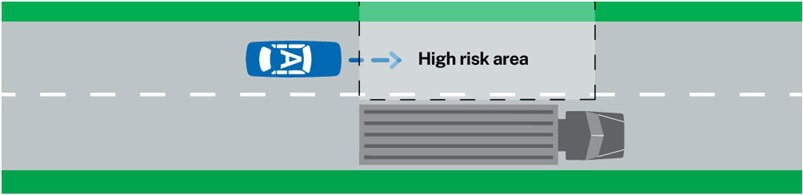
To reduce the risk of head-on crashes on multi-lane roads, only drive in the right lane when overtaking or planning to turn right.
Turns at Intersections
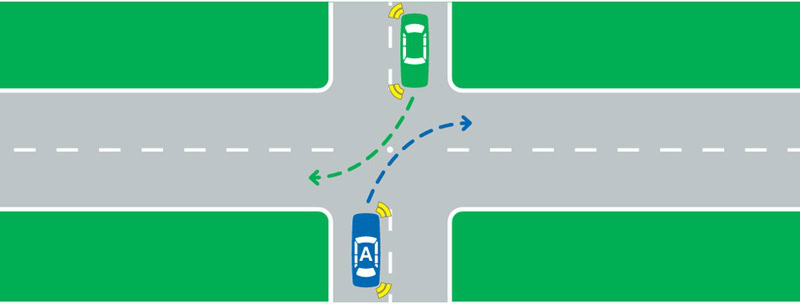
Your position when making turns is important to ensure a smooth and safe flow of traffic. When turning left on unmarked roads, you must approach as far left as practical. On laned roads, you must approach in the left lane, or any marked left turn lane.
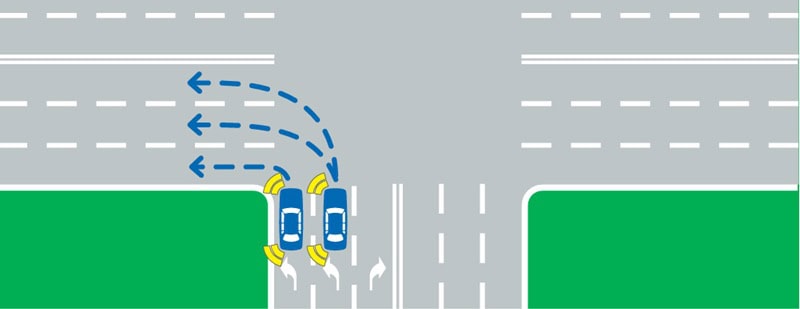
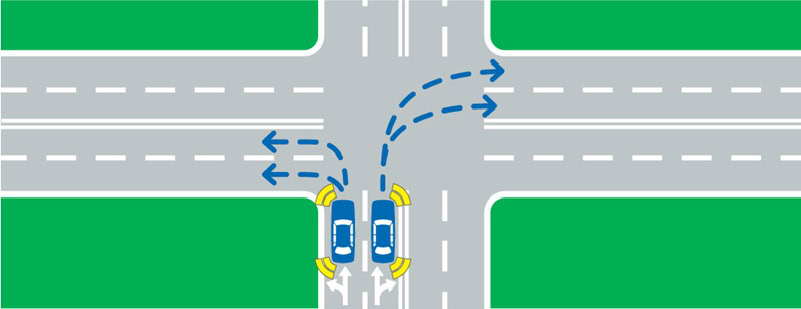
You must keep your steering straight while waiting to turn right, to protect you from being pushed into the oncoming traffic if hit from behind.
When turning right on unmarked roads you must keep to the left of, but as close as practical to the centre of the road. When turning right on laned roads you must approach in the right lane or any marked right turn lanes.
Roundabouts
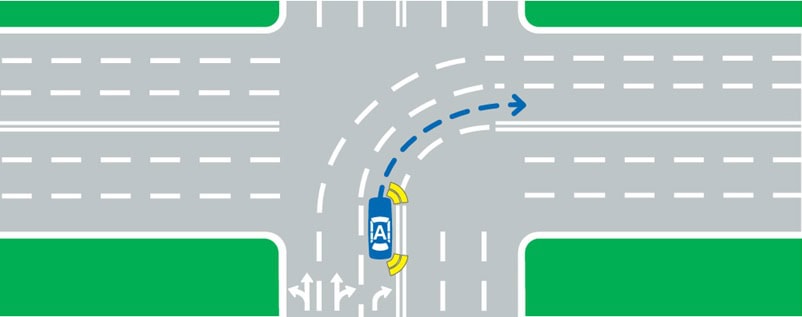
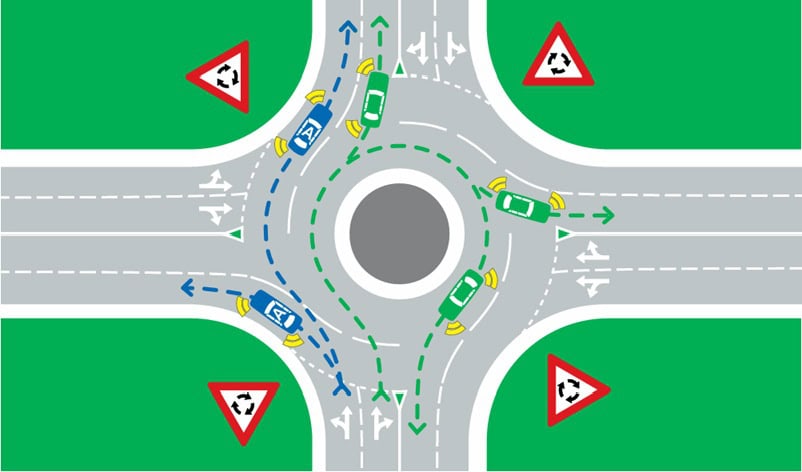
On multi-laned roundabouts position your vehicle in accordance with the road markings for the direction you intend to travel. You must exit in a permissible lane.
Approaching a roundabout: Vehicles entering a roundabout must give way to any vehicle already in the roundabout.
Exiting a roundabout: If practical, you must always signal left when exiting a roundabout.
You must check your blind spot before crossing lanes within a roundabout when exiting.
While understanding these low-risk principles is vital, putting them into practice on the road is where true skill is built. At D-Tech, we specialize in helping students in Western Sydney master these habits so they can navigate local test routes with ease. Let’s get you on the road and test-ready.
📅 Ready to Hit the Road?
Join hundreds of successful drivers across Western Sydney. Get professional, structured, and stress-free training today.

 View Test Route
📞 Call Us Anytime: 0468 525 626
Can we help you?